Successful Proof of Concept for AI Deployment

Pankl selected a driveshaft for a proof of concept on the use of AI software in order to predict its stresses as early as possible. The resulting time savings are around 80 percent.

Summary

  • Product development in motorsport projects requires maximum precision within extremely short development cycles. As a result, process optimization focuses on saving time while ensuring quality.
  • For a proof of concept (POC) of AI software, Pankl selected a driveshaft in order to predict stresses under real-world operating conditions as early as possible.
  • With AI software, simulation time for standard components such as the driveshaft was reduced from hours to minutes - a time saving of around 80 percent.

Proof of Concept in the Drivetrain Sector

The team led by Stefan Gahbauer (Head of Simulation) and Erik Jambor (Senior CAE Engineer, AI & Automation Lead) decided to introduce AI as part of a proof of concept. They selected a standard driveshaft - a component for which they already had extensive experience - and analyzed it using  Ansys FEM software. The goal was to integrate AI at a very early stage of product development to accelerate processes and test new possibilities. The insights gained during the POC led Stefan Gahbauer to conclude that significant optimization potential could be unlocked through AI.

Time Savings Through Automated Simulation Processes

Pankl has been using ANSYS simulation tools for more than 30 years. Over time, simulation workflows have been continuously optimized through standardization and automation using Python. This has enabled development engineers to further improve product precision and quality. Increased use of simulation in early development phases has also contributed to optimizing the product development process.

Maximizing the Benefits of Artificial Intelligence

Artificial Intelligence offers countless opportunities to improve your processes, reduce costs, and develop innovative products. But where exactly does the potential lie for your company? With our AI Scoping Call, we help you maximize the benefits of Artificial Intelligence. Together, we analyze your specific challenges and identify the best approaches for successfully implementing AI - practical, efficient, and tailored precisely to your needs.
Book a Free Scoping Call

AI-eBook

First Time Right—the First Manufactured Design Must Be Correct

Precision and speed are crucial for Pankl, as product development in motorsport projects requires the highest level of accuracy within extremely short timelines. Calculations are performed in weeks or even days rather than years. Accordingly, process optimization focuses on saving time and ensuring quality. In line with the “First Time Right” principle, the first manufactured design must be correct.

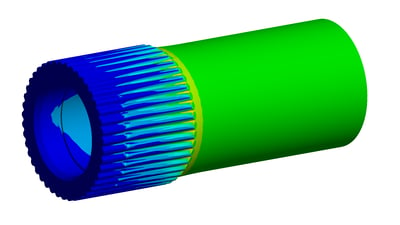
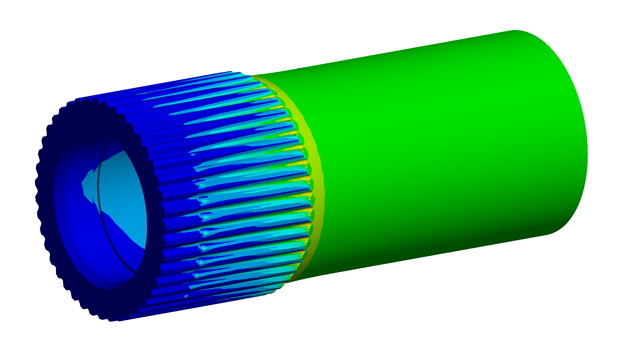
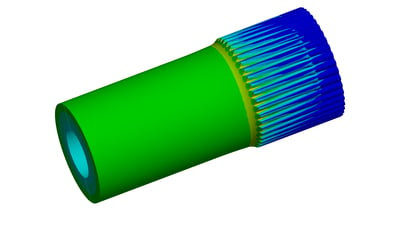
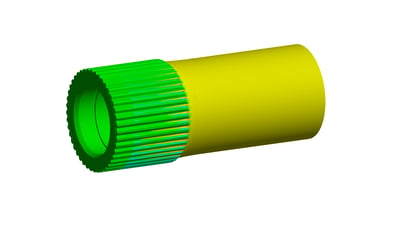
Standard drive shaft 1 | © Pankl Racing Systems AGStandard drive shaft 2 | © Pankl Racing Systems AG

The proof of concept was based on a standard drive shaft. Existing simulation data made it possible to train an AI model to predict mechanical loads. | © Pankl Racing Systems AG
Digitalization Department Acts as an Innovation Driver

The idea to use AI originated in the digitalization department, which serves as a driver of innovation and provides comprehensive support for automation and process optimization. In addition to Pankl’s simulation and digitalization teams, the proof of concept also involved simulation specialists from CADFEM and AI experts from PI Probaligence. Pankl’s management, with its open culture of innovation, provided dedicated support throughout.

In retrospect, we see the POC as a very meaningful project from which we learned a great deal. It was extremely valuable in helping us better understand how to use AI. We were able to identify early on which design modifications are possible and where the limits of feasibility lie.
Stefan Gahbauer
Head of Simulation Department, Pankl Racing Systems AG

AI-Based Prediction of Stresses in a Driveshaft

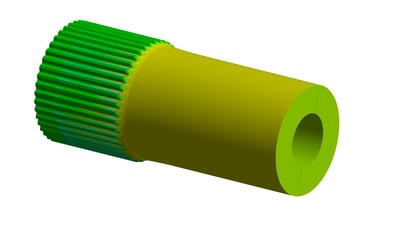
To keep the complexity manageable for the AI during the proof of concept, a simple component was selected. The team chose a standard driveshaft, as only a limited number of parameters were required for AI-based predictions of deformation. Another key advantage was the availability of large amounts of data, as Pankl engineers had already generated extensive simulation data in previous projects.

Early Evaluation of Design Variants With AI: 80 Percent Time Savings

AI support enables earlier evaluation of design variants, making it easier to identify what is technically feasible. This allows options to be narrowed down in a targeted way, facilitating decision-making. As a result, simulation times for standard components can be reduced from hours to minutes - to approximately 20 percent of the previous duration.

The findings from the proof of concept relate both to technical and organizational aspects and to efficient team collaboration. During the execution of numerous simulations - around 250 data sets - the significant time required for data collection became evident. Here too, automation proved worthwhile, with Python scripts and templates playing a key role in efficient data preparation.

Standard drive shaft 3 | © Pankl Racing Systems AGStandard drive shaft 4 | © Pankl Racing Systems AG

The proof-of-concept project demonstrated that AI can reduce the evaluation time for standard components from hours to minutes. The achieved time savings were approximately 80 percent. | © Pankl Racing Systems AG


Simplifying Complex Problem Statements

Another key insight was the need to simplify complex problem statements so that they can be effectively processed by machine learning tools. Overall, the project marked an important milestone for Pankl in understanding where AI can be effectively applied and where its current limits lie. This also led the team to redefine their expectations regarding AI.

I am very optimistic about the future of AI. The next step is to identify the most suitable use cases. I am convinced that AI is here to stay. With this proof of concept, we have taken the first step toward applying AI and are now well prepared for further projects.
Stefan Gahbauer
Head of Simulation Department, Pankl Racing Systems AG

Strong Teamwork: Significant Improvements in a Short Time

The motivation and commitment of everyone involved were particularly noteworthy. Close collaboration between experts in FE, AI, IT, and digitalization ensured rapid progress. Every team member knew exactly what needed to be done to move forward together efficiently. The support provided by CADFEM and PI Probaligence was also essential. Without their contribution, Pankl would not have been able to implement so many improvements in such a short time. Through a steep learning curve, Pankl employees gained valuable experience in using AI to handle simulation tasks more efficiently.

AI Complements, Not Replaces, Human Expertise

At no point was the goal to replace human expertise with AI. Instead, AI was intended to support and complement employees. Significant time savings were achieved for standard tasks, allowing simulation specialists to focus more on complex challenges.

About Pankl Racing Systems AG

Pankl Racing Systems AG, headquartered in Kapfenberg, is a leading manufacturer of high-performance-components in the niche markets of motorsport, the high-end automotive sector and aviation. The Austrian company was founded in 1985 and currently employs around 2,150 people, more than 1,500 of them in Austria. Most recently, annual revenues of around 360 million euros were generated. Pankl Racing Systems AG stands for innovation, quality and the highest precision. Further information at: www.pankl.com

Portrait_GFR_Blog

Author

Gerhard Friederici

CADFEM Germany GmbH

+49 (0)8092 7005-883
gfriederici@cadfem.de

Portrait_KKU_Blog

Editorial

Klaus Kuboth

CADFEM Germany GmbH

+49 (0)8092 7005-279
kkuboth@cadfem.de