Simulation: The Key to System Expertise
Gerhard Friederici
11.11.2026
How FEA, MBD, and CFD Work Together at Pankl Racing Systems
When products and their operating conditions become increasingly complex, analyzing individual components in isolation is no longer sufficient. Coupled simulations provide the system-level understanding needed to identify loads and interactions at an early stage and make well-informed development decisions. Discover how Lukas Wartner and his team at Pankl Racing Systems use FEA, multibody dynamics, and CFD throughout the entire product development process.
Summary
- Understanding the system rather than focusing on individual components: Pankl Racing Systems uses simulation to understand not only the component itself, but also its installation environment, loads, and interactions within the overall system.
- Combining methods for specific purposes: FEA forms the foundation of structural simulation, complemented by multibody dynamics for determining system loads and CFD for analyzing the effects of fluid flow and different media.
- Using simulation throughout the process: Simulation experts support the entire product development process, from project launch, design, and optimization through testing, verification, and failure analysis.
Motorsport DNA and the Role of Simulation
Motorsport is not only part of the Pankl Racing Systems name, but also an integral part of the company’s DNA. Founded 40 years ago as a supplier to the motorsport industry, the company has since significantly expanded its scope of activities. From a product development perspective, motorsport is a highly specialized environment that demands innovation at the highest level within extremely short time frames.
Although it is the drivers who must navigate their racing cars to the checkered flag with skill and courage, even the most daring drivers will remain far from the podium if the engineers cannot provide them with the best possible vehicle.
A successful supplier must be able to respond directly, quickly, and efficiently to customers’ needs. This requires genuine flexibility, creativity, and openness. “It also means using the latest technological tools available,” says Lukas Wartner. “At our company, Ansys simulation tools naturally rank very high on that list.”
Ansys software has been used successfully at Pankl for more than 30 years, as simulation quickly assumed a central role in product development. That remains true today, although its importance and range of applications have grown immensely. “With its wide variety of applications, simulation supports development very efficiently and drives it forward creatively and quickly,” emphasizes Lukas Wartner.

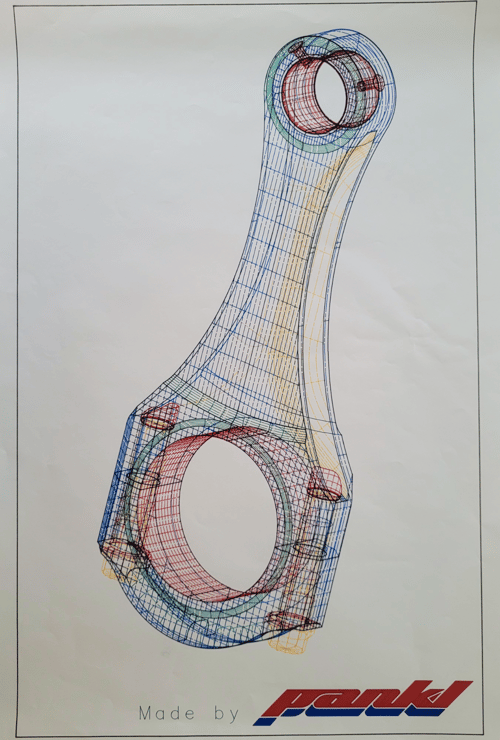
A discovery made during an office inventory: Calculation results produced with Ansys 4.4 in 1992 document more than three decades of collaboration between Pankl, CADFEM, and Ansys simulation tools. | © Pankl Racing Systems AG
Simulation Is Used Across a Wide Range of Applications
Today, Pankl Racing Systems employs simulation across a broad range of applications. The finite element method (FEA) for structural simulation continues to form the core of its activities. Pankl develops, manufactures, and supplies components for a wide variety of automotive applications - and increasingly for the aerospace industry as well. These components are often subject to high loads and are typically made from metallic materials.
In their daily work, however, Pankl’s engineers look beyond the individual component being developed. For example, they analyze the installation environment in which the component must operate reliably under high loads over the long term.

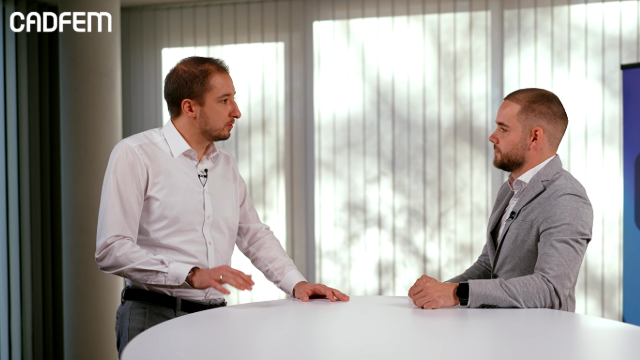
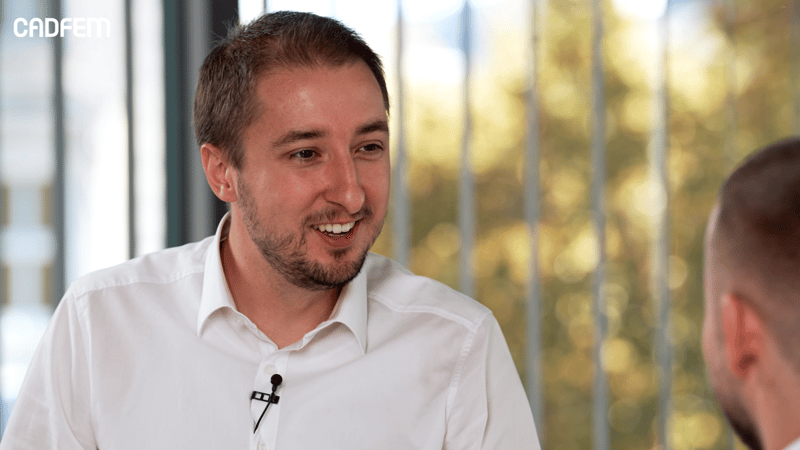
Lukas Wartner (Pankl) in Conversation | © CADFEM Germany GmbH
For this reason, simulations involving multibody dynamics (MBD) are also performed. “As systems become increasingly complex, we need to understand exactly which load cases are present,” explains Lukas Wartner. “MBD allows us to identify the specific types of system loads for which the individual component must be designed.” The same naturally applies to thermal loads. These are also captured through simulation and incorporated into the component design.
Pankl has also developed expertise in computational fluid dynamics. CFD makes it possible to analyze what is happening around the components. One example is the effect of the different media present in a combustion engine, all of which influence the component being designed.
System Expertise Through Simulation
Successful product development today requires system expertise. Simulation provides the understanding needed across components, assemblies, and their interactions. This is why Pankl Racing Systems uses simulation throughout the entire product development process:
-
Project launch
-
Concept phase
-
Component design
-
Optimization
-
Testing
-
Verification
-
Failure analysis
Integrating Simulation Throughout the Product Development Process
Pankl Racing Systems positions itself as a development partner that offers comprehensive system expertise. “We do not see ourselves simply as a contract manufacturer,” says Lukas Wartner. “That is very important to us, which is why we have extensive engineering capabilities across a wide variety of areas. As simulation experts, we are deeply involved in the development processes, and the entire product development cycle is our field of expertise.”
This involvement begins at the project kickoff, where Pankl’s engineers participate in defining and planning resources. During the subsequent design phase - the core area of responsibility for the simulation specialists – the component’s geometry is developed and the manufacturing processes are defined. This is followed by the selection of materials and the definition of weight requirements, stiffness characteristics, and the target service life.
Simulation provides the system-level understanding needed to identify loads and interactions at an early stage and make well-founded development decisions.
Once the basic development work has been completed, the optimization loops begin. This is where the simulation engineers come in, identifying opportunities to achieve further percentage improvements in the areas that matter most.
“The subsequent testing phase is particularly exciting, whether we are dealing with a chassis or engine component and whether testing takes place on our own test rigs or directly in the customer’s vehicle,” says Lukas Wartner. “This is when we find out whether we have done a good job. We can now verify our simulations and obtain the feedback needed to determine how they might be improved further.” The tested components are also inspected for wear and other changes in their material properties to identify any remaining potential for improvement. The same naturally applies to any failure analyses that may be required.
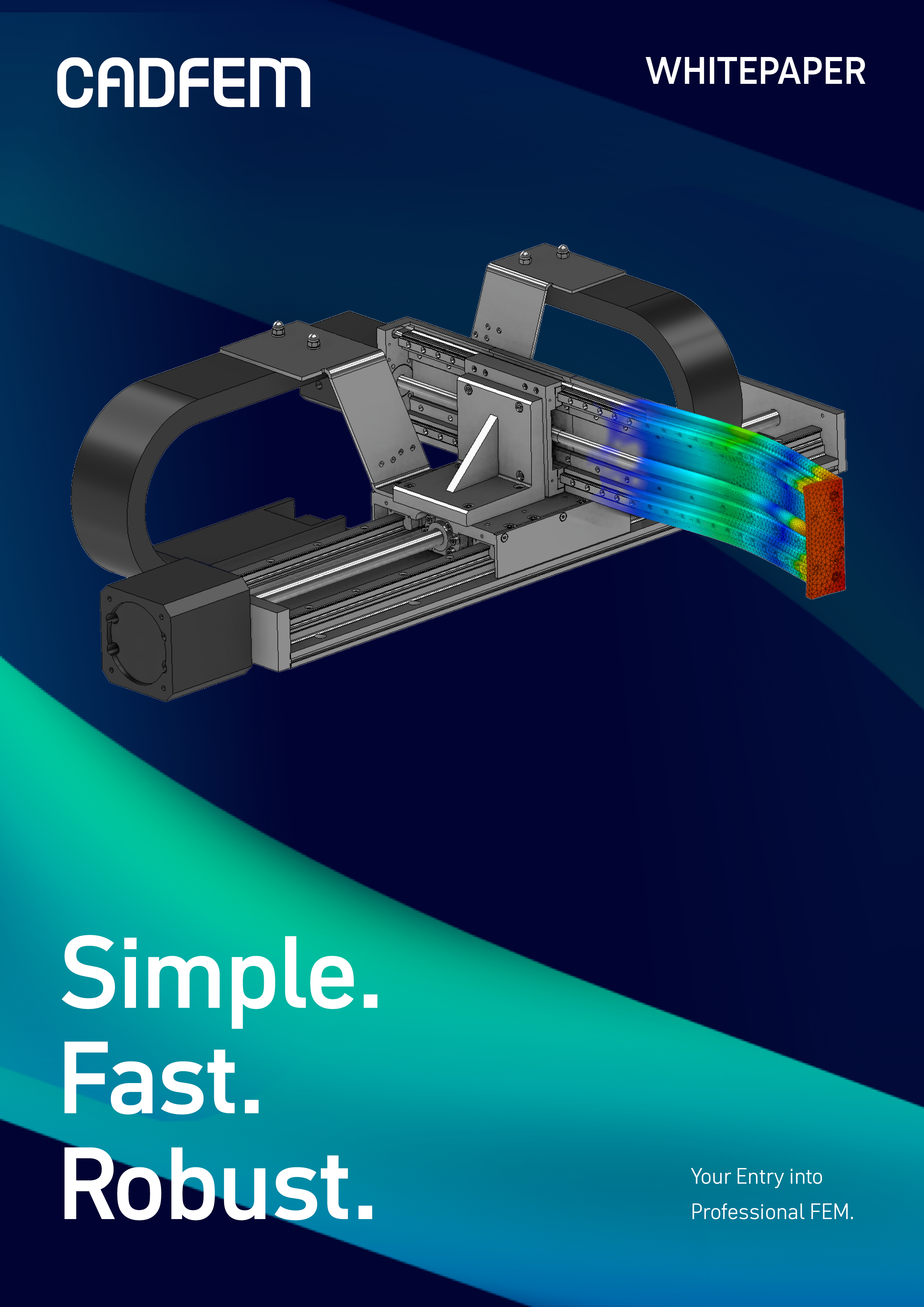
Deepen your knowledge: FEM whitepaper
Learn in this whitepaper how to establish structural simulation in your company in a structured way, avoid common pitfalls, and understand the real importance of result quality, stability, and IT integration in everyday practice. Two case studies show how Ansys Mechanical is applied in real projects.
Download the whitepaper now and take a solid step into professional FEM

The Partnership with CADFEM and Ansys Pays Off
Pankl Racing Systems does not only strive to be a development partner with comprehensive system expertise itself. The ambitious company expects the same from its close partners. “CADFEM is an excellent example of the kind of development partner we are looking for,” explains Lukas Wartner. “CADFEM does not see itself merely as a software supplier or consulting firm. With its extensive expertise and engineering capabilities, CADFEM enables us as a customer to master the challenging tasks we have taken on.”
Pankl Racing Systems operates in a particularly demanding economic niche and relies on dependable partners such as CADFEM. The collaboration has worked successfully for decades and has proven its value. Partnerships like these are essential because Pankl covers a broad range of sophisticated applications. They are also important for meeting the company’s objective of continuously expanding its expertise. Through this transfer of knowledge, Pankl employees continually acquire new skills, enabling them to independently implement the developments their customers require.
About Pankl Racing Systems AG
Pankl Racing Systems AG, headquartered in Kapfenberg, is a leading manufacturer of high-performance-components in the niche markets of motorsport, the high-end automotive sector and aviation. The Austrian company was founded in 1985 and currently employs around 2,150 people, more than 1,500 of them in Austria. Most recently, annual revenues of around 360 million euros were generated. Pankl Racing Systems AG stands for innovation, quality and the highest precision. Further information at: www.pankl.com
Watch the interview with Lukas Wartner (Head of Simulation, Pankl):