Agricultural Technology From Pöttinger: Succeeding With Simulation
Alexander Kunz
12.05.2026
With Ansys and CADFEM to High‑Quality Agricultural Machinery
“More successful with Pöttinger” – the company delivers on this customer promise through reliable partnerships and the use of the latest methods. In product development, this means making intensive use of simulation technology and continuously expanding its application. Simulation enables Pöttinger to manage growing product complexity while driving innovation and ensuring maximum quality.
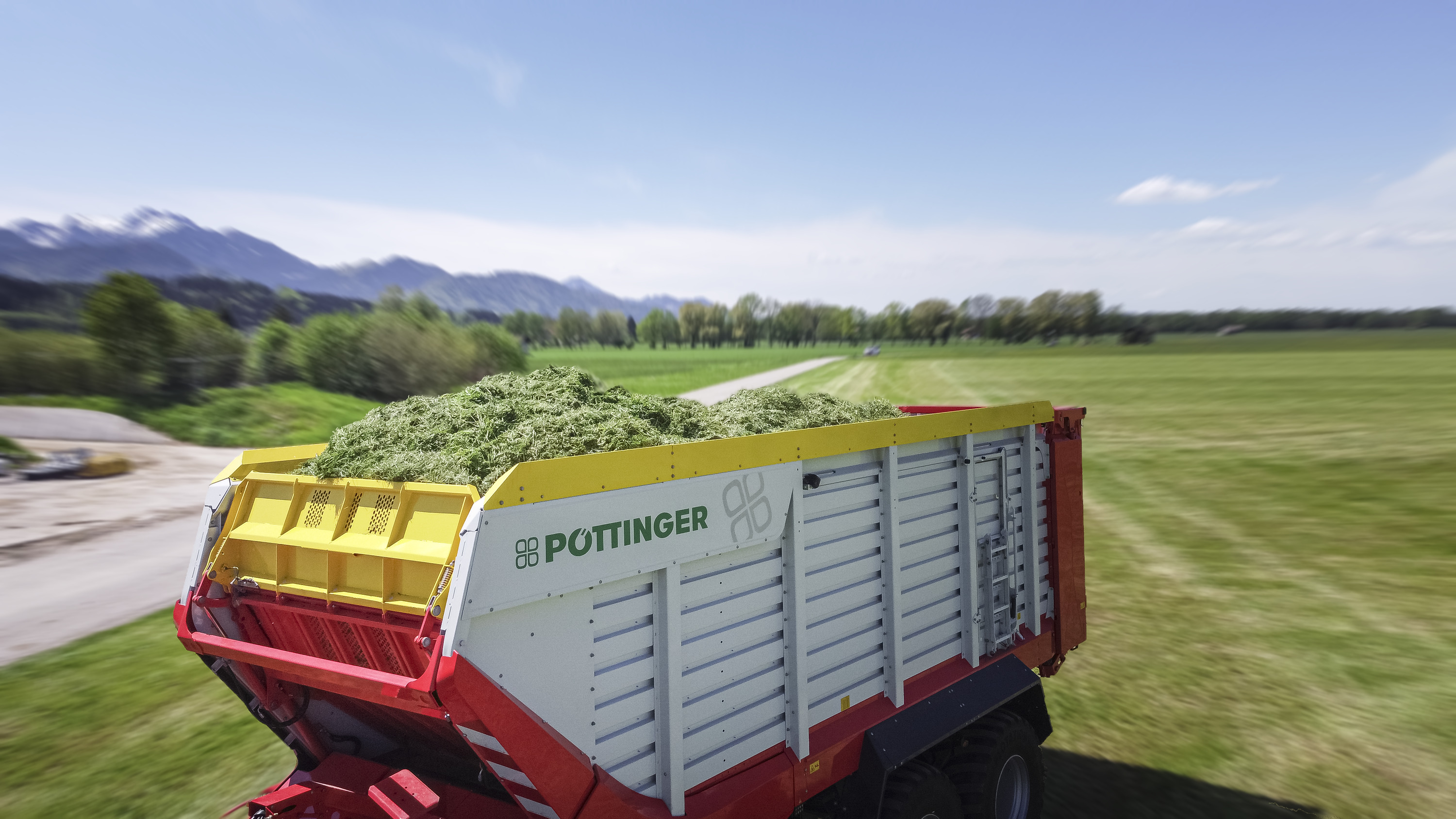
Pöttinger is an internationally leading specialist in agricultural machinery. | © Pöttinger
Summary
- At agricultural machinery specialist Pöttinger, simulations are an integral part of the development process for all products.
- Especially in the early development phase, simulation is used extensively so that virtual prototypes already reach a very high level of maturity.
- The examples of the JUMBO loader wagon and the HIT large‑area tedder show how simulation makes a decisive contribution to innovation, quality, and sustainability.
Pöttinger has been using simulation for more than 25 years. Initially, Ansys was used as an application on a CAD workstation. In 2007, the company established a dedicated department equipped with several Ansys licenses and a close partnership with the CADFEM Austria team. Since then, simulation has been a core element of the agile, networked, and collaborative product development approach known as the “Pöttinger Creation Process” (PEP).
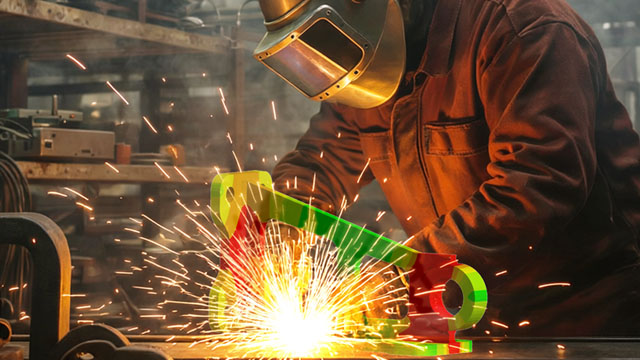
Josef Bruckner has been a simulation engineer at Pöttinger since 2016 and has headed the simulation team of the internationally leading agricultural machinery specialist ever since. Most of the simulations focus on structural mechanics and cover a wide range of complex tasks such as analyzing folding processes or evaluating welded joints. Together with his team, Josef Bruckner solves these challenges and thus contributes significantly to the innovation and quality for which the Pöttinger brand is known in the agricultural sector.

Since 2016, Josef Bruckner has led the simulation team at Pöttinger. | © CADFEM
Deepen your knowledge: FEM whitepaper
Learn in this whitepaper how to establish structural simulation in your company in a structured way, avoid common pitfalls, and understand the real importance of result quality, stability, and IT integration in everyday practice. Two case studies show how Ansys Mechanical is applied in real projects.
Download the whitepaper now and take a solid step into professional FEM
Simulation Firmly Embedded in the Development Process
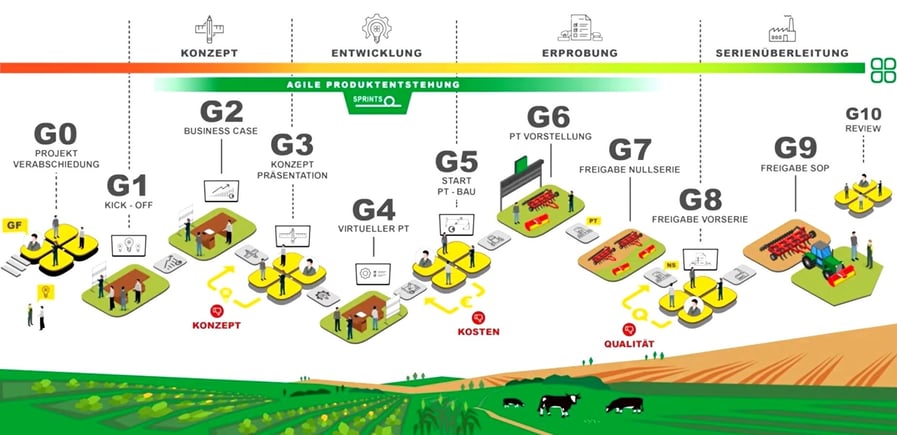
“We practically do not develop anything without simulation,” says Josef Bruckner, emphasizing its importance. Within PEP, simulation is required everywhere – from design‑driven idea evaluation in early concept phases to detailed series development and performance analysis during serial production. Simulation work is never done in isolation but always collaboratively with other stakeholders: design, measurement and testing, prototyping, production, and product management.

Das Team von Josef Bruckner und seine Simulationen mit Ansys sind ein integraler Bestandteil des Pöttinger Entstehungs-Prozess“ (PEP). Entwickelt wird agil, vernetzt und kooperativ. | © Pöttinger
Highly Mature Virtual Prototypes From the Start
Most of the numerous simulation hours per product are invested in the early stages – pre‑development. The reason is simple: during these phases, design decisions and changes do not yet incur significant costs. Alternatives can be explored, solutions identified, and key decisions made – and Ansys simulation tools make this possible. The goal and added value of simulation at Pöttinger is that the very first physical prototype already reaches a high level of maturity.
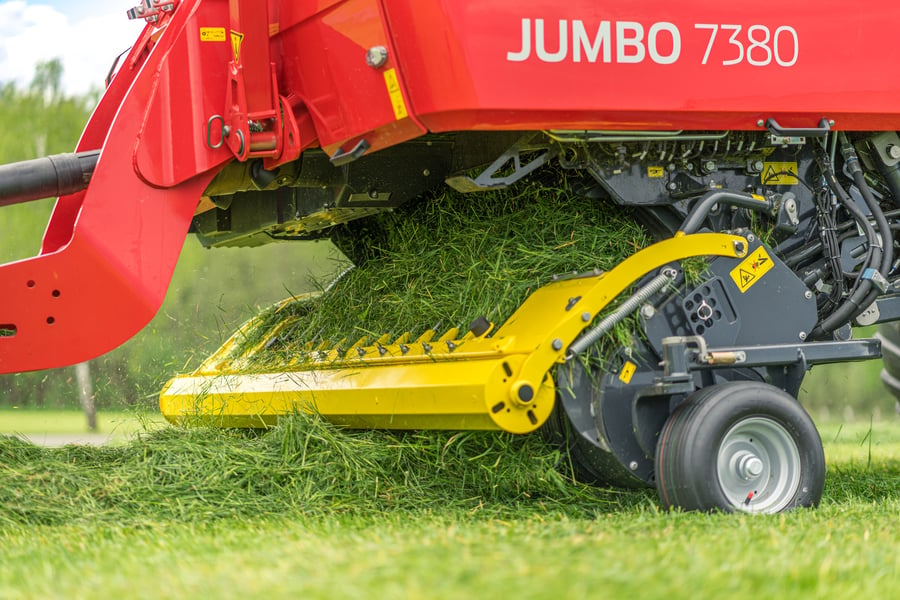
When asked about highlights, Josef Bruckner names two examples from “countless others”: the drawbar of the JUMBO loader wagon and the highly complex folding processes of the HIT large‑area tedder.
We practically do not develop anything without simulation anymore.
Robust and Lightweight: A Topology‑Optimized Drawbar
JUMBO is the name of Pöttinger’s successful loader wagon model. During dynamic loading, the drawbar is subjected to numerous and highly variable mechanical load scenarios and must function with absolute reliability. During its development in 2010, an additional heavy welded component was initially planned as reinforcement. In parallel, a lighter alternative was investigated. Using topology optimization in Ansys Mechanical, unnecessary material was identified and removed. The result was a variant that was lighter and at the same time more robust than the original concept. A long‑lasting success: the JUMBO continues to use this optimized design to this day.

In 2010, the reinforcing welded component of the JUMBO was optimized using topology optimization in Ansys Mechanical so that it fulfilled all functions with reduced material usage. | © Pöttinger
Precise and Reliable: Folding Processes Without Dead Points
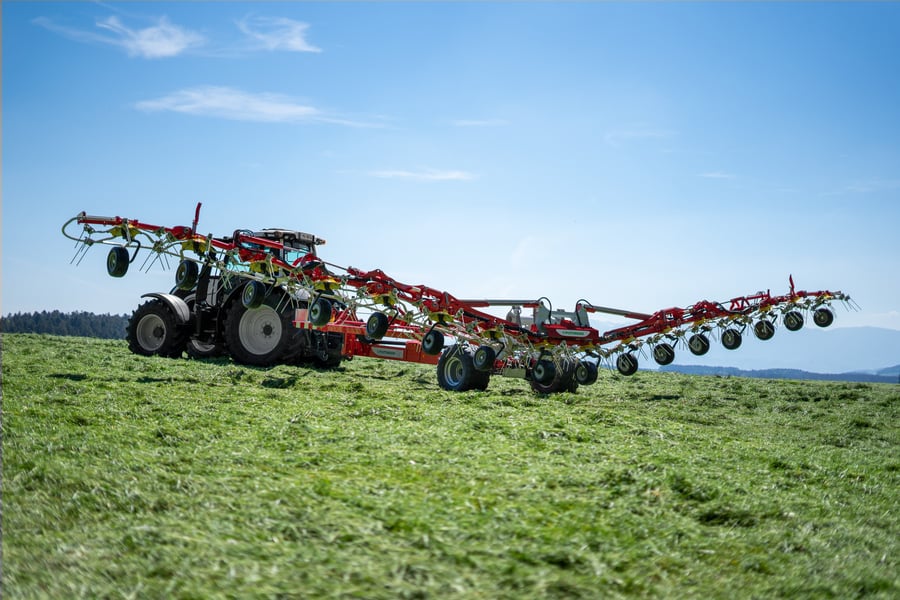
The HIT large‑area tedder is one of Pöttinger’s flagship products in grassland technology. Even in its largest version, with 16 rotors and a working width of 17 meters, it adapts to different field shapes and ground conditions. Its standout feature: tedding is performed with minimal dirt contamination from soil particles that might enter the forage when tines touch the ground. Using Ansys simulations, Pöttinger identified the critical dead points in the folding processes and adjusted parameters so that contamination is avoided. This is an essential requirement, ensuring top‑quality animal feed.

Ansys simulations revealed the critical dead points in folding processes. By optimizing parameters, contamination of animal feed was minimized. | © Pöttinger
Pöttinger’s Formula for Success: Observe, Follow, Implement
Pöttinger’s strong belief in the potential of simulation and its intensive use of Ansys in product development are key success factors. Together with CADFEM, the company continuously identifies new application areas, refines processes and workflows, and evaluates and integrates new technologies. Examples include automation solutions and a custom toolbar tailored to the company’s needs. Pöttinger is also advancing the use of Python for efficient analysis of load data from testing, as well as the integration of AI. Together with CADFEM, Pöttinger monitors and assesses emerging trends – and when they show clear added value, they are implemented in line with Josef Bruckner’s motto: “There is always room for improvement.”
CADFEM meets Josef Bruckner
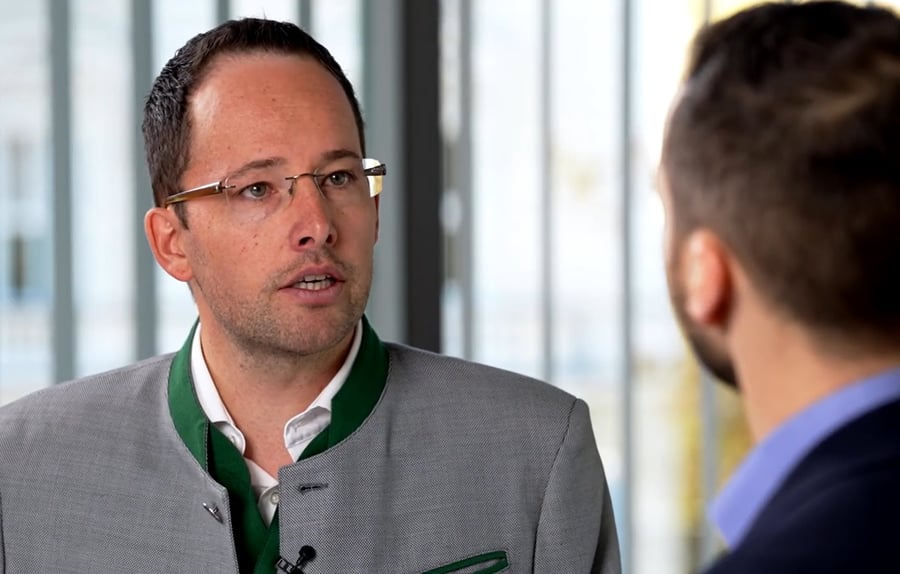
In a conversation with CADFEM Austria team member Florian Hollaus, Josef Bruckner, Head of Simulation at Pöttinger, offers deeper insights into product development at Pöttinger – with special focus on simulation, its history, its role within the Pöttinger Creation Process (PEP), its value especially in structural mechanical tasks, and how it continues to evolve.
Take a look at the interview with Josef Bruckner: