Analog Astronaut & Mission Simulant

Ludwig Sapper's grandmother is probably right: you shouldn't try to do everything at once. Ludwig Sapper, however, seems determined to prove otherwise. He is currently juggling, among other things, a master's degree in aerospace engineering, training for an Ironman, rocket development, and a programme for future astronauts. In a special interview, he told us how simulations help him and what it’s like to be part of a simulation himself. He’ll share more insights at the CADFEM World Conference in Darmstadt.
Summary

  • Analog space missions such as Asclepios prepare aspiring space professionals for isolation, collaboration, and mutual trust under realistic conditions.
  • Numerical simulation supports Ludwig Sapper's hands-on rocket development with TUM's WARR team, including lightweight Type 5 carbon-fiber tanks and solid-fuel rockets.
  • Simulation bridges theory and practice: Experience with FEA and Ansys gained at university is applied directly to challenging student spaceflight projects, supporting the development and evaluation of new solutions.

If you want to know what a lunar mission feels like, a trip to the Swiss Alps is a good place to start. There, high up in the Sasso San Gottardo fortress, lies a tunnel system that topologically resembles the Moon. It is precisely at this location that 10 students from around the world—selected from among thousands of applicants—spend two weeks in complete isolation. What unites the participants is a shared ambition to pursue a future in spaceflight. The “Asclepios” mission is designed to give them a sense of what might lie ahead. One of them is Ludwig Sapper. The master’s student in aerospace engineering at the Technical University of Munich is also an Ironman finisher, a rocket developer, a dedicated Ansys user, and a likable, thoughtful young man.

During their two weeks in the fortress, the group of “analog astronauts” is completely on its own while participating in a multifaceted simulation. The simulation involves extreme conditions: no contact with the outside world, limited space, and no privacy—but the other participants, with their diverse backgrounds and personalities, are always nearby. Ultimately, it’s about psychology, tolerance, and absolute mutual trust—or, as Ludwig Sapper puts it:

We’re being trained to be friends.
Ludwig Sapper

Why would anyone put themselves through this? The answer lies in a passion for space exploration. To achieve the goal of becoming an “astronaut,” in addition to good grades in relevant fields, experiences such as Asclepios and a range of extracurricular activities are essential. Ludwig Sapper received this advice from someone who should know: Professor Dr. Ulrich Walter, himself a former astronaut and, until 2025, holder of the Chair of Astrodynamics at TUM.

Ludwig Sapper on his way to the 2024 Spaceport America Cup (SAC) in the New Mexico desert. | © WARR
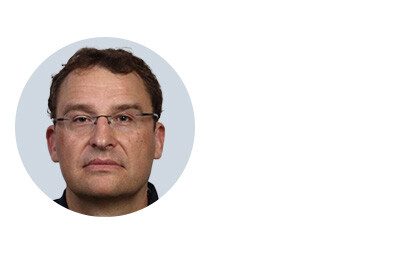
Ludwig Sapper on his way to the 2024 Spaceport America Cup (SAC) in the New Mexico desert. | © WARR
Student Rocket Scientist on the WARR Team

WARR (the acronym stands for “Wissenschaftliche Arbeitsgemeinschaft für Raketentechnik und Raumfahrt“, which translates to “Scientific Working Group for Rocket Technology and Spaceflight”) is the largest student group at TUM. Active since 1962, it has more than 650 members today work on challenging projects related to space. Ludwig Sapper worked in many different areas at WARR, eventually heading up rocket development. During his studies at TUM, he became familiar with FEM, Ansys, and CADFEM, and at WARR he was able to apply his simulation skills in a practical setting: this included the development of particularly lightweight Type 5 tanks made of carbon fiber, as well as a self-initiated project on solid-fuel rockets, in which the TUM 2024 team was the only one out of 150 competitors to successfully launch a two-stage rocket in the U.S.

WARR and Ludwig Sapper at the CADFEM Conference in Darmstadt, Germany

WARR is a student team sponsored by CADFEM Academic that works extensively with Ansys and will present its latest developments hands-on at the CADFEM World Conference in Darmstadt. Ludwig will also be there in person and available at the WARR booth to answer questions about the rocket's development and simulation. He will also give a presentation on astronaut training and the Asclepios project—even though he had to cancel his own participation at the last minute, with a heavy heart. The reason is other commitments, just as his grandmother pointed out from the start.

Watch now the interview with Ludwig Sapper (GER):


Portrait_AK_Blog

Author

Alexander Kunz

CADFEM Germany GmbH

+49 (0)8092 7005-889
akunz@cadfem.de

Portrait_KKU_Blog

Editorial

Klaus Kuboth

CADFEM Germany GmbH

+49 (0)8092 7005-279
kkuboth@cadfem.de